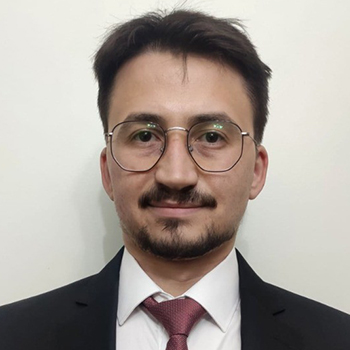
Assist. Prof. Abdulahad Bayraktar
@
Dept. of Biostatistics And Medicine Informatics, Cerrahpasa Faculty Of Medicine,
Istanbul University-Cerrahpaşa,Istanbul, Türkiye
https://avesis.iuc.edu.tr/abdulahadbayraktar
A Systems Medicine Approach to Diagnosis and Treatment
Abstract:
Nowadays, it is understood that many diseases do not follow a strict aetiology but rather are composition of many distinct causative factors and modified biological mechanisms. A strikingexample is alzheimer’s disease; even though protein agglomeration in elders theory holds its stand, a plethora of theories (neuroinflammation, type 3 diabetes, viral origin, cerebrovascular origin etc) matching the heterogeneity of patients and susceptible individuals makes the disease one of the most difficult health problems of today. A similar problem arises in explaining and treating sarcopenia. While ageing remains as the most predictive factor, gender, Body Mass Index, exercise level and cardiovascular events interplay with the severity of the process.
Omics-based systems medicine methods are promising in diagnosis, prognosis and treatment of these diseases owing to their holistic approach. they are not only able to signify markers causatively, but also coherent with both wet lab experiments and other computational models. In this presentation, Dr Abdulahad Bayraktar will share the findings from his systems medicine studies in Alzheimer’s disease and sarcopenia.