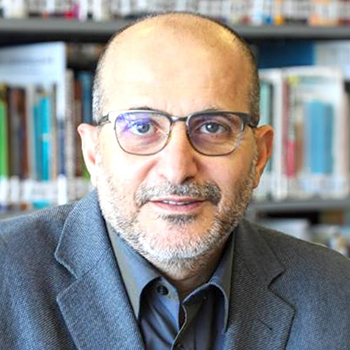
Prof. Reda Alhajj
@
Department of Computer Engineering,
Istanbul Medipol University, Istanbul, Türkiye
https://sens.medipol.edu.tr/reda-al-hajj/
Can AI Advance Macrocycles?
Machine Learning for Predicting Cell Membrane Permeability and Enhancing Oral Bioavailability of Macrocyclic Drugs
Abstract:
Macrocyclic compounds represent a unique and promising class of therapeutic agents, bridging the gap between small organic molecules and large biologics. Their large ring shaped structures confer exceptional stability and selectivity, enabling them to modulate challenging intracellulartargets with flat, groove-shaped, or tunnel-like binding sites, that are often inaccessible to conventional small molecules. These properties make macrocycles particularly valuable in drug discovery. However, their large, flexible structures don’t follow the same rules as typical small-molecule drugs. Their location in the beyond Rule of Five (bRo5) chemical space, characterized by high molecular weight and structural complexity, poses significant challenges for predicting their membrane permeability, a critical factor for oral bioavailability. In addition, thesynthesis of macrocycles demands highly skilled labor, extensive time, and substantial costs, further complicating their advancements. That’s why there’s a need to find better ways to overcome these limitations and push macrocycles further along the development pipeline, and this is where recent advances in artificial intelligence (AI) and machine learning (ML) offer transformative solutions to these problems.
Innovative models, including traditional ML algorithms, convolutional neural networks (CNNs), graph convolutional networks (GCNs), and transformers, are being used to predict cell penetration and guide rational design. These tools help decode the “chameleonic” behavior of macrocycles, their ability to adapt conformations in different environments, which is key to balancing solubility and permeability. The therapeutic potential of macrocycles is vast, spanning multiple disease areas including infectious diseases, oncology, and autoimmune disorders, with a growing pipeline of clinical candidates. However, their development remains constrained by some challenges, particularly their membrane passive diffusion due to complex conformational dynamics and structural properties that break the traditional small-molecule guidelines. Now, with the rise of AI, we’re opening up new doors in macrocycle drug discovery. The challenge is real, but the potential is also there.